HVOF Coating
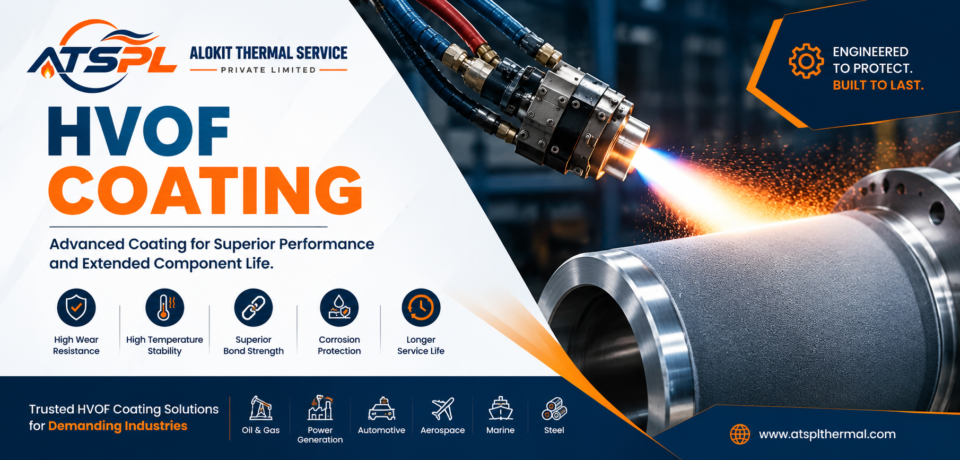
HVOF Coating, or High Velocity Oxy-Fuel Coating, is an advanced thermal spray technology used to improve the surface performance and service life of industrial components. It is widely used for applications where machinery is exposed to severe wear, abrasion, erosion, corrosion, friction, and demanding operating conditions.
For industries such as power generation, steel, cement, oil & gas, mining, chemical processing, and general engineering, HVOF Coating can provide a durable protective surface while helping reduce component replacement and maintenance requirements.
Alokit Thermal Service Pvt. Ltd. (ATSPL) provides specialized HVOF and thermal spray coating solutions for industrial components from its facility in Ahmedabad, Gujarat, India.
What Is HVOF Coating?
HVOF stands for High Velocity Oxy-Fuel. It is a thermal spray process in which coating powder is introduced into a high-velocity combustion gas stream. The coating particles are heated and accelerated toward the prepared substrate at very high speed.
When these particles impact the component surface, they deform and form a dense coating layer. The resulting HVOF Coating Services in India can provide high hardness, strong adhesion, low porosity, and excellent resistance to wear and corrosion.
Unlike conventional surface treatment methods, HVOF allows engineers to improve the properties of the component’s surface while retaining the characteristics of the underlying substrate.
The selection of the coating material and process parameters depends on the component material, operating temperature, type of wear, corrosion environment, required coating thickness, and surface finish.
Why Is HVOF Coating Important?
Industrial components often operate continuously under harsh conditions. Abrasive particles, high-velocity fluids, mechanical friction, corrosive chemicals, and high temperatures can gradually damage exposed surfaces.
A properly selected HVOF Coating Services in India can create a protective barrier between the component and its operating environment.
Key advantages include:
- High surface hardness
- Excellent wear resistance
- Improved abrasion resistance
- Enhanced erosion protection
- Better corrosion resistance
- Strong coating adhesion
- Low coating porosity
- Extended component service life
- Reduced maintenance requirements
- Potential reduction in component replacement costs
The actual performance of an HVOF coating depends on correct coating selection, substrate preparation, application parameters, finishing, and quality control.
How Does HVOF Coating Work?
The HVOF Coating Services in India process generally involves several stages.
1. Component Inspection
The component is first evaluated for its material, dimensions, surface condition, operating environment, and damage mechanism. This helps determine whether HVOF is suitable for the application.
2. Surface Preparation
Proper surface preparation is critical. The component is cleaned and prepared to remove contaminants and create suitable surface characteristics for coating adhesion.
3. Coating Material Selection
The coating material is selected according to the required performance. Carbide-based materials such as tungsten carbide and chromium carbide are commonly considered for demanding wear applications.
4. HVOF Spraying
The coating powder is introduced into the HVOF system, heated, and accelerated at high velocity toward the component. The particles impact the prepared surface and form the coating.
5. Finishing
After coating, the component may require grinding or precision finishing to achieve the required dimensions and surface roughness.
6. Inspection
The coated component can be inspected for properties such as coating thickness, hardness, bond strength, porosity, and surface condition according to application requirements.
HVOF Coating Materials
Choosing the correct material is an important part of a successful HVOF Coating application.
Tungsten Carbide Coating
Tungsten carbide is widely used for applications requiring high resistance to abrasive and sliding wear. It can be suitable for shafts, rollers, pump components, valves, sleeves, and other industrial surfaces.
ATSPL provides tungsten carbide wear coating solutions for suitable industrial applications.
Explore Tungsten Carbide Wear Coating
Chromium Carbide Coating
Chromium carbide-based coatings can be selected for applications involving elevated temperatures, wear, and oxidation. The appropriate coating system depends on the component’s actual operating environment.
ATSPL’s HVOF service includes carbide coating solutions for demanding industrial applications.
Explore ATSPL HVOF Coating Services
Applications of HVOF Coating
The versatility of HVOF Coating makes it suitable for a wide range of industrial components.
Valves
Industrial valves can experience erosion, corrosion, friction, and wear. HVOF coatings can provide a protective surface for suitable valve components.
Pump Shafts and Sleeves
Rotating pump components can experience continuous friction and fluid-related wear. HVOF coatings can improve surface resistance for appropriate applications.
Turbine Components
Turbine components can be exposed to high-speed operation, erosion, and demanding environmental conditions. Application-specific HVOF coatings can provide additional surface protection.
Rollers
Industrial rollers can experience continuous contact, abrasion, and surface wear. HVOF technology can be used for selected roller applications requiring high surface durability.
Mechanical Seals
Mechanical seals require controlled surface characteristics and resistance to wear. Suitable HVOF coatings can improve the durability of selected sealing surfaces.
Compressor Components
Compressor components can be exposed to friction, erosion, and wear. HVOF coatings can help protect suitable components against surface deterioration.
Industries Using HVOF Coating
HVOF Coating is used across multiple industries where component surfaces require enhanced protection.
Power Generation
Power-generation equipment can experience erosion, abrasion, and demanding operating conditions. HVOF coatings can be considered for suitable turbine and other critical components.
ATSPL also provides specialized in-situ boiler tube anti-erosion coating solutions for applicable boiler applications.
Explore Boiler Tube Anti-Erosion Coating
Steel Industry
Steel manufacturing equipment operates under high temperatures, mechanical loads, and abrasive conditions. HVOF coatings can protect selected rollers, shafts, and wear surfaces.
Cement Industry
Cement plants generate highly abrasive environments. Wear-resistant HVOF coatings can be used on appropriate components exposed to abrasive particles.
Oil & Gas
Oil and gas equipment may face corrosion, erosion, friction, and mechanical wear. HVOF coating systems can provide additional surface protection for suitable applications.
Mining
Mining equipment is exposed to severe abrasion and wear. HVOF coatings can be considered for selected components where high surface durability is required.
Chemical and Process Industries
Chemical-processing equipment may operate under corrosive and demanding conditions. The appropriate HVOF coating can help protect suitable surfaces.
HVOF Coating for Component Restoration
One of the valuable applications of HVOF Coating Services in India is restoring selected worn components.
Industrial shafts, rollers, cylinders, and other components can lose material because of wear or corrosion. Instead of replacing the entire component, thermal spray technology may be used to rebuild a worn surface where technically appropriate.
After coating, precision grinding or finishing can restore the component to the required dimensions.
ATSPL also provides roller and cylinder reclamation and component restoration services.
Learn More About Roller & Cylinder Reclamation
Explore Component Restoration Services
Component restoration can potentially reduce replacement costs, material consumption, and equipment downtime.
Why Choose ATSPL for HVOF Coating?
Alokit Thermal Service Pvt. Ltd. (ATSPL) specializes in thermal spray and surface engineering solutions for industrial applications.
ATSPL provides HVOF coating solutions for demanding applications involving valves, pump shafts and sleeves, turbine components, rollers, mechanical seals, compressor components, and other industrial wear surfaces.
The company’s HVOF capabilities include tungsten carbide and chromium carbide coating solutions. ATSPL’s published HVOF specifications include micro-hardness up to 1400 HV, bond strength exceeding 10,000 PSI, and porosity below 1% for applicable coating systems.
For customers looking for HVOF Coating Services in India, ATSPL’s Ahmedabad, Gujarat facility provides specialized surface engineering solutions based on application requirements.
How to Select the Right HVOF Coating?
Before selecting an HVOF Coating Services in India, several technical factors should be evaluated:
- Base material of the component
- Type of wear
- Operating temperature
- Corrosion exposure
- Abrasion and erosion conditions
- Required coating thickness
- Required surface hardness
- Surface finish requirements
- Component geometry
- Expected service life
A professional coating provider should evaluate these factors before recommending a coating material and process.
Frequently Asked Questions About HVOF Coating
1. What is HVOF Coating?
HVOF Coating stands for High Velocity Oxy-Fuel Coating. It is an advanced thermal spray process used to apply protective metallic or carbide coatings onto industrial components to improve surface performance.
2. What is HVOF Coating used for?
HVOF is commonly used for wear, abrasion, erosion, and corrosion protection on components such as valves, shafts, rollers, pump components, turbine parts, mechanical seals, and compressor components.
3. What materials are used in HVOF Coating?
Common materials include tungsten carbide and chromium carbide. The best coating material depends on the component’s substrate, operating conditions, and required performance.
4. Is HVOF Coating suitable for wear protection?
Yes. HVOF is particularly useful for applications requiring high hardness and resistance to abrasive, sliding, and erosive wear.
5. What is tungsten carbide HVOF Coating?
Tungsten carbide HVOF Coating is a carbide-based surface coating designed to provide high hardness and strong resistance to abrasive and sliding wear.
6. What industries use HVOF Coating?
Power, steel, cement, oil & gas, mining, chemical, engineering, and process industries can use HVOF coating for suitable applications.
7. Can HVOF Coating extend component life?
A properly selected and applied HVOF coating can improve surface resistance to wear and corrosion and may extend the service life of suitable components.
8. Can HVOF Coating be used for component restoration?
Yes. In suitable cases, HVOF or other thermal spray processes can rebuild worn surfaces, followed by precision grinding or finishing.
9. Where does ATSPL provide HVOF Coating Services?
Alokit Thermal Service Pvt. Ltd. (ATSPL) is based in Ahmedabad, Gujarat, India, and provides specialized HVOF and thermal spray coating solutions for industrial customers.
10. How can I contact ATSPL for HVOF Coating?
You can contact ATSPL with information about your component, substrate material, dimensions, operating conditions, type of wear, and coating requirements for a technical evaluation.